
Male Infertility Treatment: A Complete Guide to Options, Causes, and Solutions
Infertility is often seen as a women’s health issue, but in reality, male infertility contributes to nearly 40–50% of all infertility cases. The good news? Advances in medical science have made it possible to diagnose and treat male infertility effectively, helping many couples achieve their dream of parenthood.
In this guide, we’ll explore the causes, diagnosis, and most importantly—the wide range of treatment options for male infertility. Whether you’re just starting to look into fertility support or have already been diagnosed, understanding your options is the first step toward a solution.
What is Male Infertility?
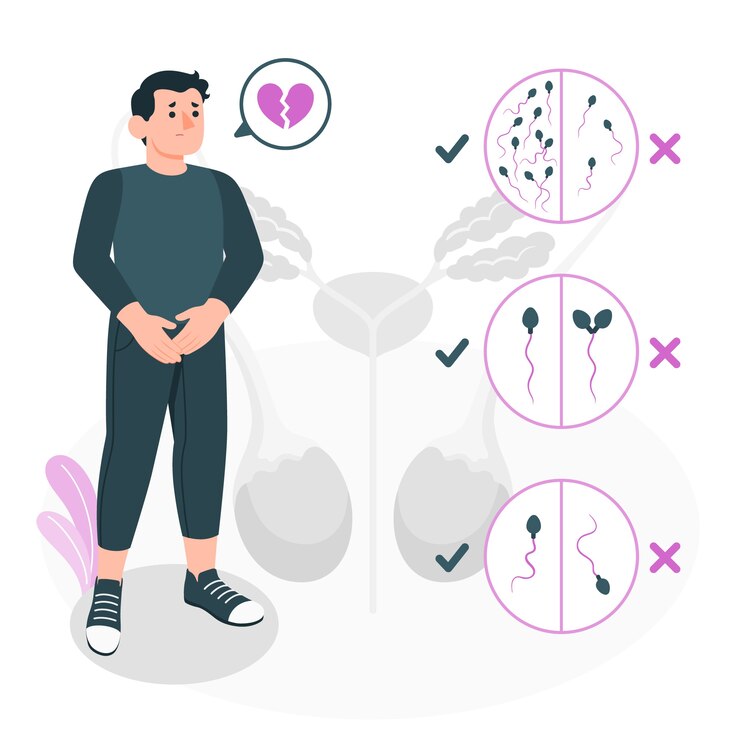
Male infertility refers to a man’s inability to impregnate a female partner after at least a year of regular, unprotected sexual intercourse. It can be due to problems with sperm production, sperm function, or blockages that prevent the delivery of sperm.
Common Causes of Male Infertility
There are many potential causes of male infertility, including:
🔹 Sperm Disorders
-
Low sperm count (oligospermia)
-
Poor sperm motility (asthenozoospermia)
-
Abnormal sperm shape (teratozoospermia)
-
No sperm in the semen (azoospermia)
🔹 Structural Problems
-
Blockages in the vas deferens or epididymis
-
Varicocele (enlarged veins in the scrotum)
-
Ejaculatory duct obstruction
🔹 Hormonal Imbalances
-
Low testosterone
-
Problems with the hypothalamus or pituitary gland
🔹 Genetic Conditions
-
Klinefelter syndrome
-
Y chromosome microdeletions
🔹 Lifestyle and Environmental Factors
-
Smoking, alcohol, drug use
-
Exposure to toxins or heat
-
Obesity or poor nutrition
-
High stress or anxiety
🔹 Medical Conditions or Treatments
-
Past surgeries (e.g., hernia repair)
-
Chemotherapy or radiation
-
Diabetes
-
Infections (such as mumps, STDs)
How is Male Infertility Diagnosed?
Diagnosis starts with a detailed medical and sexual history, followed by several key tests:
-
Semen Analysis – The most basic and essential test that evaluates sperm count, motility, morphology, and volume.
-
Hormonal Testing – Blood tests to check testosterone, FSH, LH, and prolactin levels.
-
Scrotal Ultrasound – To detect varicoceles or blockages.
-
Genetic Testing – In cases of zero sperm or severe abnormalities.
-
Testicular Biopsy – To determine if sperm production is occurring inside the testicles.
Treatment Options for Male Infertility
Treatment for male infertility depends on the underlying cause. Options range from lifestyle changes and medications to advanced reproductive technologies. Below is a breakdown of the most common and effective treatments:
✅ 1. Lifestyle Modifications
Often the simplest place to start:
-
Quit smoking and limit alcohol
-
Avoid hot tubs, saunas, and tight clothing
-
Reduce exposure to toxins (e.g., pesticides, heavy metals)
-
Maintain a healthy weight and balanced diet
-
Manage stress and get regular sleep
-
Exercise moderately—avoid overtraining
These changes may take several months to show improvement, but they can significantly boost fertility potential.
✅ 2. Medications & Hormonal Therapy
If hormonal imbalances or infections are involved, medications may help:
-
Clomiphene citrate or hCG injections: To boost natural testosterone and sperm production.
-
Antibiotics: If infection is affecting sperm health.
-
Aromatase inhibitors: To adjust hormone levels.
-
Dopamine agonists: For conditions like high prolactin levels.
These treatments are typically monitored over a period of months, with regular semen analyses.
✅ 3. Surgery
Surgical options are available for structural problems, blockages, or varicoceles:
-
Varicocelectomy – Repairing enlarged veins in the scrotum to improve sperm quality.
-
Vasovasostomy or Vasoepididymostomy – Reversing a vasectomy or fixing a blockage.
-
TUR-ED (Transurethral Resection of Ejaculatory Ducts) – Removing obstructions in the ejaculatory ducts.
Surgical outcomes vary but can dramatically improve the chances of natural conception or allow for assisted reproduction.
✅ 4. Sperm Retrieval Techniques
For men with no sperm in their ejaculate (azoospermia), sperm can still be retrieved directly from the testicles or epididymis:
-
PESA (Percutaneous Epididymal Sperm Aspiration)
-
TESA (Testicular Sperm Aspiration)
-
TESE (Testicular Sperm Extraction)
These procedures are usually done under local anesthesia and are often paired with ICSI.
✅ 5. Assisted Reproductive Technology (ART)
If other treatments aren’t successful or time is a factor (e.g., advanced maternal age), ART offers highly effective solutions:
📌 IUI (Intrauterine Insemination)
Washed sperm is inserted directly into the uterus during ovulation. Ideal for mild male infertility or when using donor sperm.
📌 IVF (In Vitro Fertilization)
Eggs and sperm are combined in a lab. If sperm parameters are sufficient, natural fertilization occurs outside the body.
📌 ICSI (Intracytoplasmic Sperm Injection)
A single sperm is injected directly into an egg. This is the most effective ART option for severe male infertility, especially with low sperm count or motility.
✅ 6. Use of Donor Sperm
When no viable sperm can be retrieved or used, donor sperm is a compassionate option. Donor sperm can be used with IUI or IVF and comes from thoroughly screened donors via certified sperm banks.
Emotional Impact and Support
Male infertility can be emotionally challenging, often affecting self-esteem, relationships, and mental health. Feelings of guilt, shame, and inadequacy are common—but should never be faced alone.
Ways to Find Support:
-
Individual or couples therapy
-
Fertility support groups (online and offline)
-
Education and counseling from fertility specialists
-
Open conversations with your partner
At Pregaworld, we emphasize the importance of emotional wellness alongside medical care. Infertility is never anyone’s fault, and every fertility journey is valid.
Final Thoughts: You Have Options—And You’re Not Alone
Male infertility can be overwhelming, but it is treatable—and in many cases, reversible. Whether through lifestyle changes, medication, surgery, or advanced fertility treatments, many men go on to father biological children.
The most important step is getting a proper diagnosis and working closely with a fertility specialist to find the treatment plan that’s right for you.
At Pregaworld, we are here to support and guide you through every stage of this journey—with information, empathy, and access to modern fertility solutions.
Parenthood is possible—and it begins with hope, action, and care.